

“Worry time”
Worrying is part of being human. But when worry takes over your day, it can feel exhausting and hard to switch off.
One helpful technique is called “worry time”. This means setting aside a short time each day to think about and write down your worries, instead of letting them fill your whole day.
How worry time works
1. Choose a time (about 15 minutes)
Find a time that works for you.
If you worry a lot at night, delaying worry time until the morning may help you sleep. Other people prefer to do it before bed to help clear their mind. Try different times and see what works best for you.
2. Write worries down as they appear
When worries pop up during the day, tell yourself, “I’ll think about this at my worry time”, and write them down somewhere safe.
3. Refocus on what you were doing
After writing them down, gently return to your activity.
If it’s hard to refocus, try the Worry Tree diagram.
This can help you decide which worries to let go of and which are practical problems to solve.
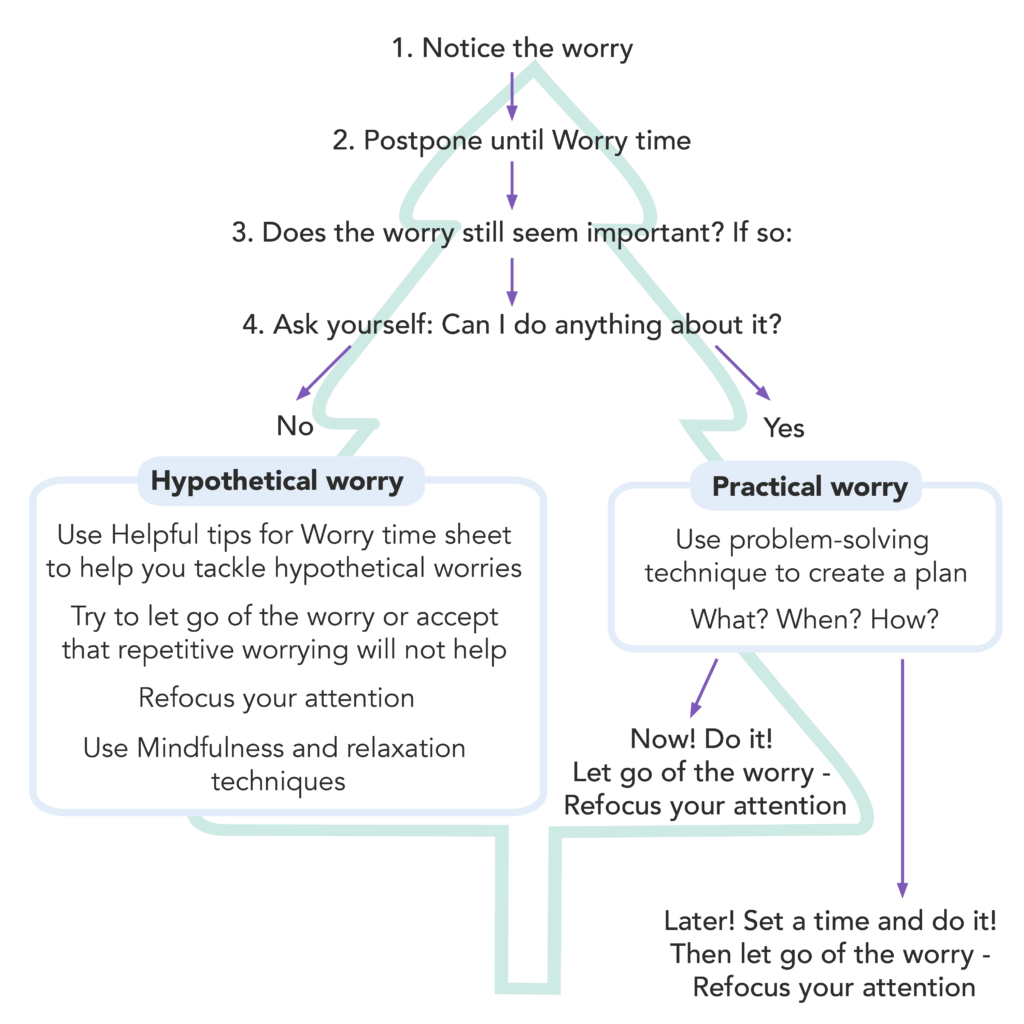
Read description of Worry tree diagram
Download this diagram as a pdf:
The Worry tree
4. Come back to your list during worry time
When worry time arrives:
- read through your worries
- notice if any now feel smaller
- decide which are practical problems and which are “what if” thoughts
- use the tips sheet to guide you
Try your best to stop thinking about these worries after the 15 minutes are over.
After worry time, do something kind, calming or energising to lift your mood, like listening to music, watching a favourite show, or getting some fresh air.
For more ideas, visit our page on planning weekly self-care.
Any new worries can be saved for the next day.
Complete the Worry time list for about two weeks and review your progress using the Helpful tips for Worry time sheet.
5. Problem-solving practical worries
Some worries are about real problems you can do something about. The Seven step problem-solving worksheet can help you break these down into small, manageable steps.
Try it yourself
You will need to print off worksheets or download them to a computer or laptop to complete this activity.
You can use the Worry time list worksheet to make a record of any worries (or record them on your phone if you prefer).
Worry time list worksheet
You can use this list of Helpful tips for worry time worksheet to work through and challenge any anxious thoughts.
Helpful tips for Worry time
Any practical problems you have identified can be tackled using the Seven step problem-solving technique. This technique can help you find and work through possible solutions.
7 step problem-solving technique
If these activities feel difficult, you don’t have to do them on your own. They can be easier with the support of a therapist.
You can always talk to your GP or refer yourself to Leeds Mental Wellbeing Service (NHS Talking Therapies).
Last updated: February 2026