

Anxiety can sometimes get stuck in a loop. This loop can start with a physical sensation, a thought, or a feeling.
The feelings themselves can be so uncomfortable – racing heart, shaky legs, knots in your stomach – that you start to worry something bad is happening.
That worry then makes the symptoms stronger, which makes you worry even more.
This is known as the vicious cycle of anxiety.
An example
- You notice your heart beating fast.
- You think: “Something is wrong with me.”
- You feel panicked, and your heart beats even faster.
- You start to avoid situations where you might feel this way again.
Over time, your brain learns to expect anxiety in certain places or situations. Just thinking about them can trigger the cycle.
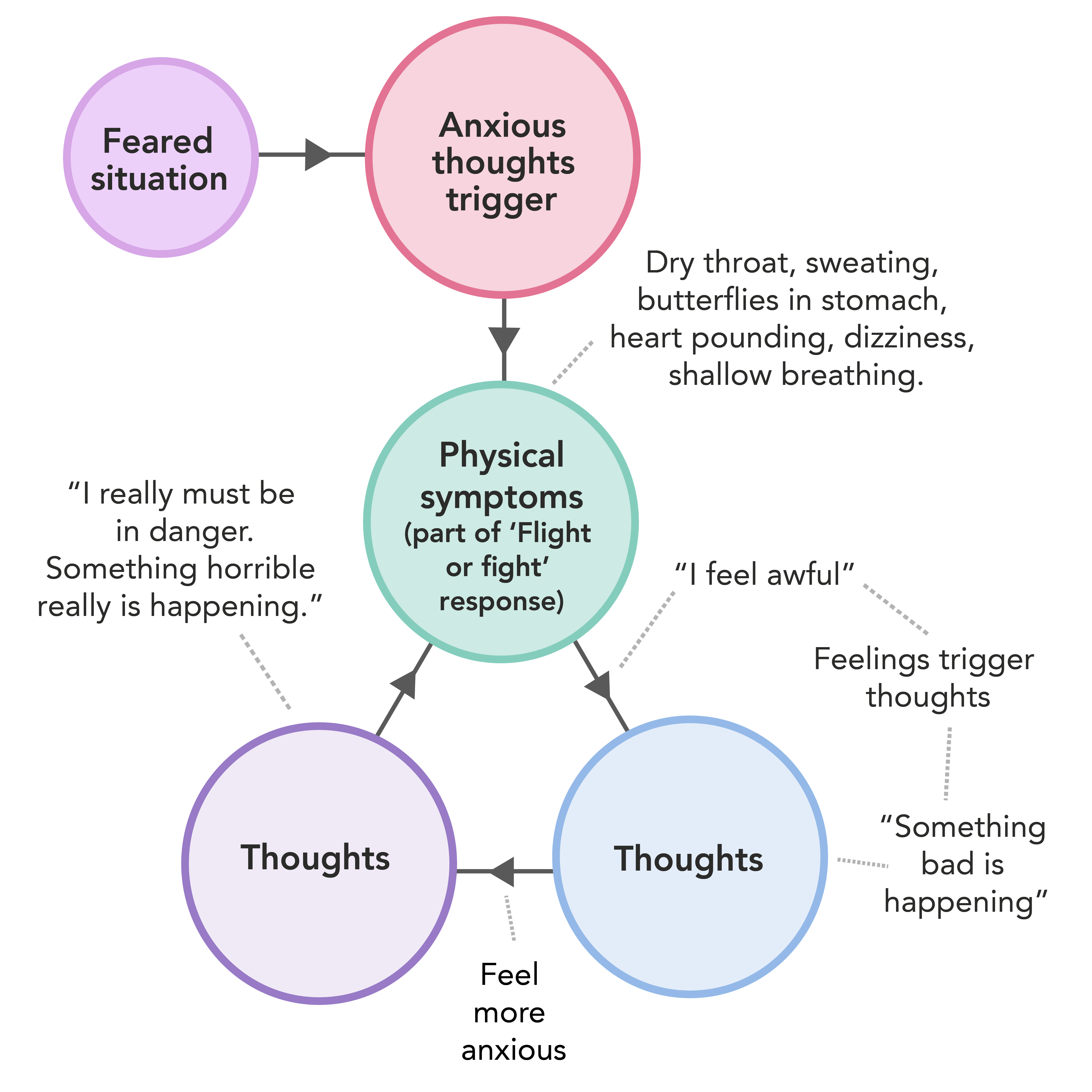
Read description of What can keep anxiety going diagram
Download this diagram as a pdf
What can keep anxiety going
Safety behaviours and avoidance
When something feels frightening, it’s natural to look for short-term relief. You might:
- sit near an exit
- avoid busy shops or social situations
- carry water, medication or “just in case” items
- constantly check your phone
These actions are known as safety behaviours and can calm you in the moment, but also send the message to your brain: “I’m only safe if I do this.” This can make anxiety stronger over time.
For some neurodivergent people, things like headphones or comfort items are helpful adjustments rather than safety behaviours.
The vicious cycle of anxiety shows how our thoughts, feelings and the way we behave (safety behaviours and avoidance) can all be connected.
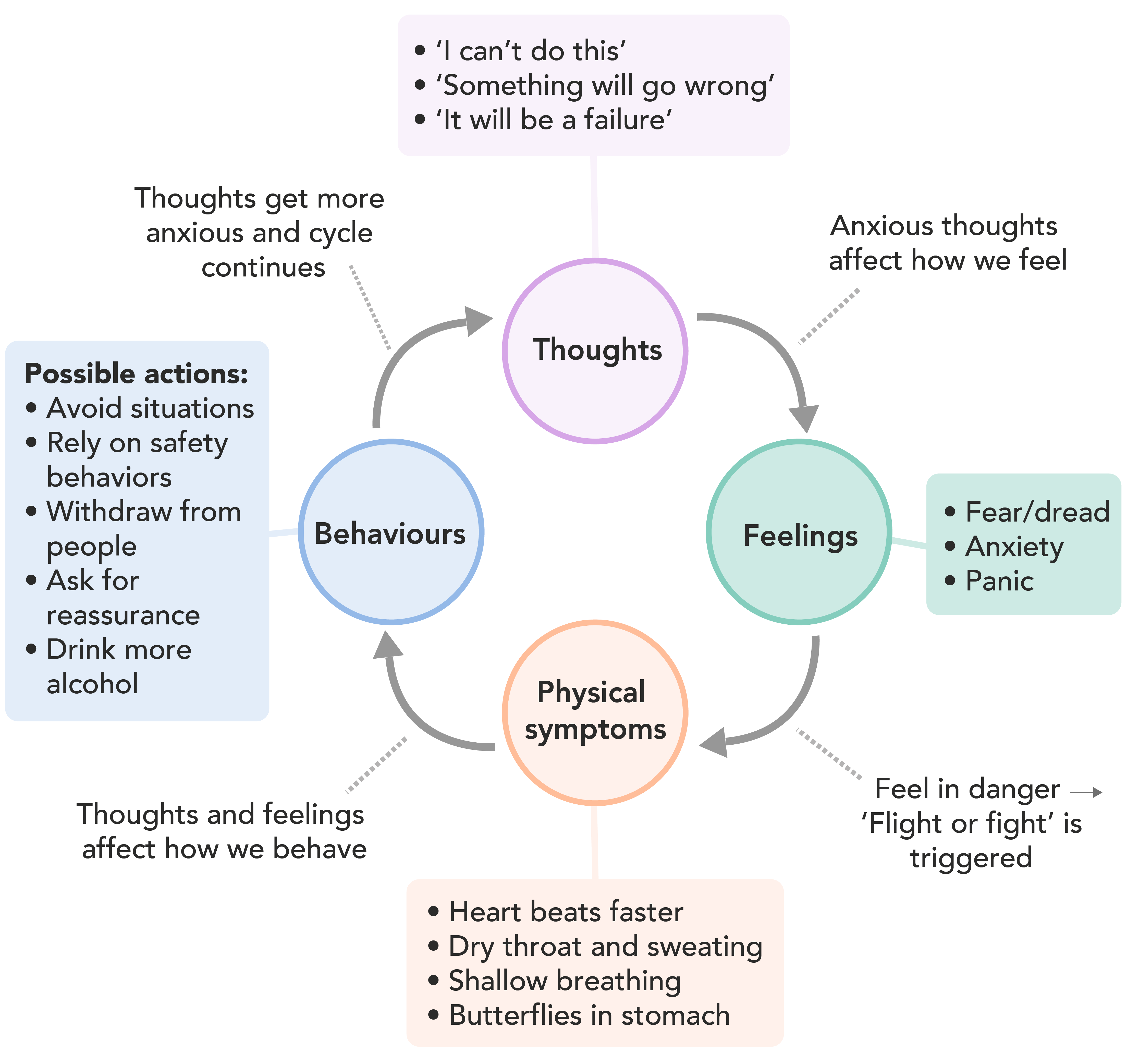
Read description of Vicious cycle of anxiety diagram
Download this diagram as a pdf:
Vicious cycle of anxiety
Try it yourself
You will need to print off the worksheet or download it to a computer or laptop to complete this activity.
Completing our Blank vicious cycle of anxiety worksheet can help you to take a look at how anxiety could be affecting you.
Vicious Cycle of Anxiety – blank
We have created an example involving a job interview to help you. The example shows how safety behaviours can lead to wanting to avoid situations and actually increase anxiety.
Vicious Cycle of Anxiety with example
If these activities feel difficult, you don’t have to do them on your own. They can be easier with the support of a therapist.
You can always talk to your GP or refer yourself to Leeds Mental Wellbeing Service (NHS Talking Therapies).
Last updated: February 2026