

Having a panic attack can be really frightening. So it makes sense that afterwards, many people become much more aware of their body — noticing small changes and sensations they might not have paid attention to before.
The problem is that this heightened awareness can actually make panic more likely, even when nothing dangerous is happening.
Why normal sensations can start to feel frightening
After a panic attack, sensations that are completely normal — a slightly faster heartbeat, feeling a bit warm, breathing a little quicker — can start to feel alarming.
This is because the brain has learned to associate these feelings with danger. So instead of noticing a faster heartbeat and thinking nothing of it, you might think:
“Something is wrong. I’m having a heart attack.”
That frightening thought makes the body react more strongly. Your heart beats faster. Your breathing changes. The sensations intensify, which can make the thought feel even more convincing.
This feedback loop — where thoughts, fear and physical sensations keep feeding into each other — is what’s known as the panic cycle.
How the cycle works
During panic, it’s very common to mistake anxiety sensations for signs that something serious is happening. Some common examples:
| Symptom | Common fear |
| Fast heartbeat | “I’m having a heart attack” |
| Dizziness and feeling wobbly | “I’m going to faint or collapse” |
| Shallow breathing | “I’m going to stop breathing” |
| Racing thoughts | “I’m losing control” |
| Feeling detached from reality | “I’m going ‘crazy’” |
| Numbness or tingling sensations | “I’m having a stroke” |
| Need to go to the toilet | “I’m going to embarrass myself” |
| Blurred vision | “I’m going blind” |
These thoughts feel very real and convincing in the moment. But they are the panic cycle at work — the sensations make the thoughts feel more believable, and the thoughts make the sensations more intense.
Avoidance and safety behaviours
After experiencing panic, many people understandably start changing what they do to try to prevent it happening again.
This might look like:
- avoiding busy places or public transport
- staying near exits
- not going out alone
- carrying water or medication just in case
- frequently checking your breathing or pulse
- leaving situations quickly when anxiety starts to build
These responses make complete sense. In the short term, they can help you feel safer.
But over time, they can accidentally keep panic going. When you avoid a situation or rely on a safety behaviour, your brain can start to believe the situation really was dangerous — or that you couldn’t have coped without the safety behaviour.
Gradually, the things that feel safe can get smaller and smaller.
Understanding the cycle is a useful first step
Once you can see how the panic cycle works, it becomes easier to start making small changes that interrupt it.
The key things to understand are:
- panic sensations are part of the body’s alarm system — uncomfortable, but not dangerous
- frightening thoughts can make symptoms feel stronger than they are
- avoidance can keep fear going, even when the original danger has passed
It can help to look back at a recent panic attack and ask yourself:
- what were you doing beforehand?
- what physical sensations did you notice first?
- what thoughts went through your mind?
- what did you do in response?
You can use our panic cycle worksheet to work through this in more detail.
The panic cycle diagram
The diagram below shows how thoughts, feelings, physical sensations and behaviour interact during panic.
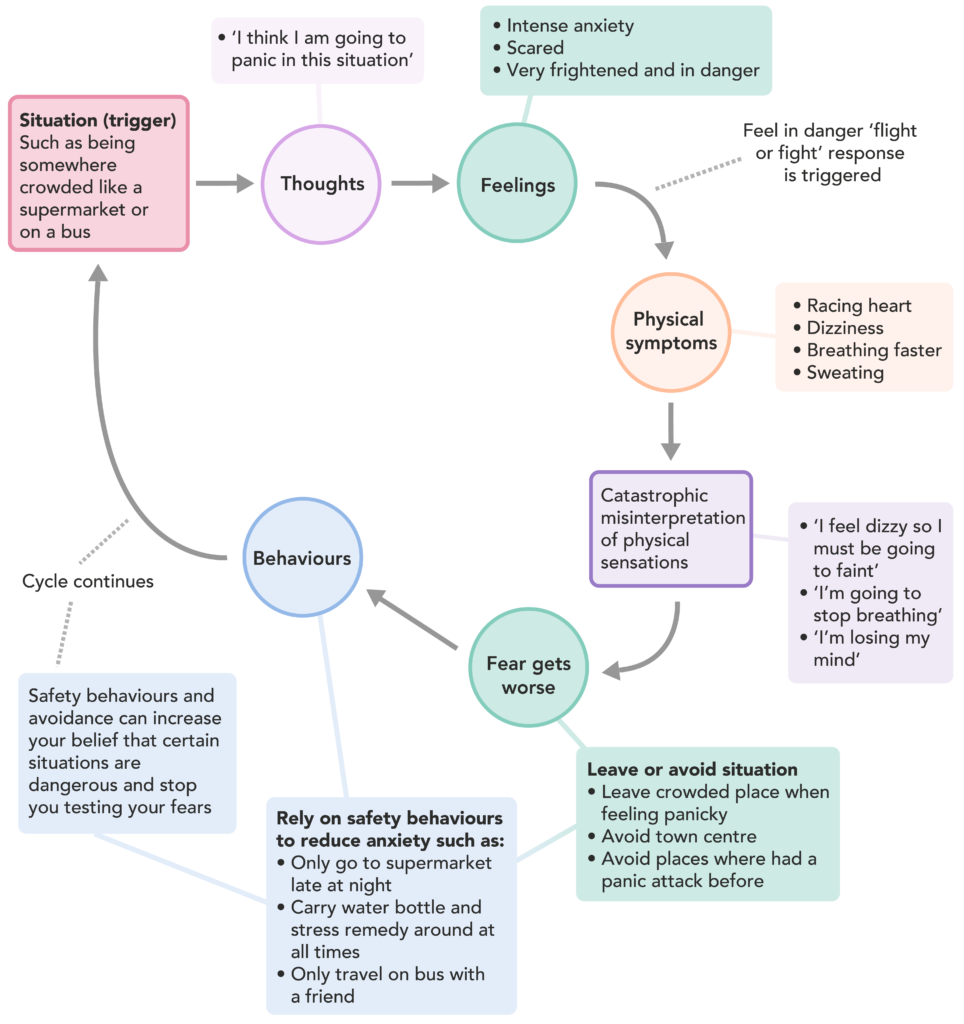
You can also download the diagram or view it as a web page.
Vicious cycle of panic
Vicious cycle of panic (blank)
If you have new, unusual or severe symptoms, or you’re worried about your physical health, it’s always okay to speak to a GP — don’t put it off.
Last updated: June 2026